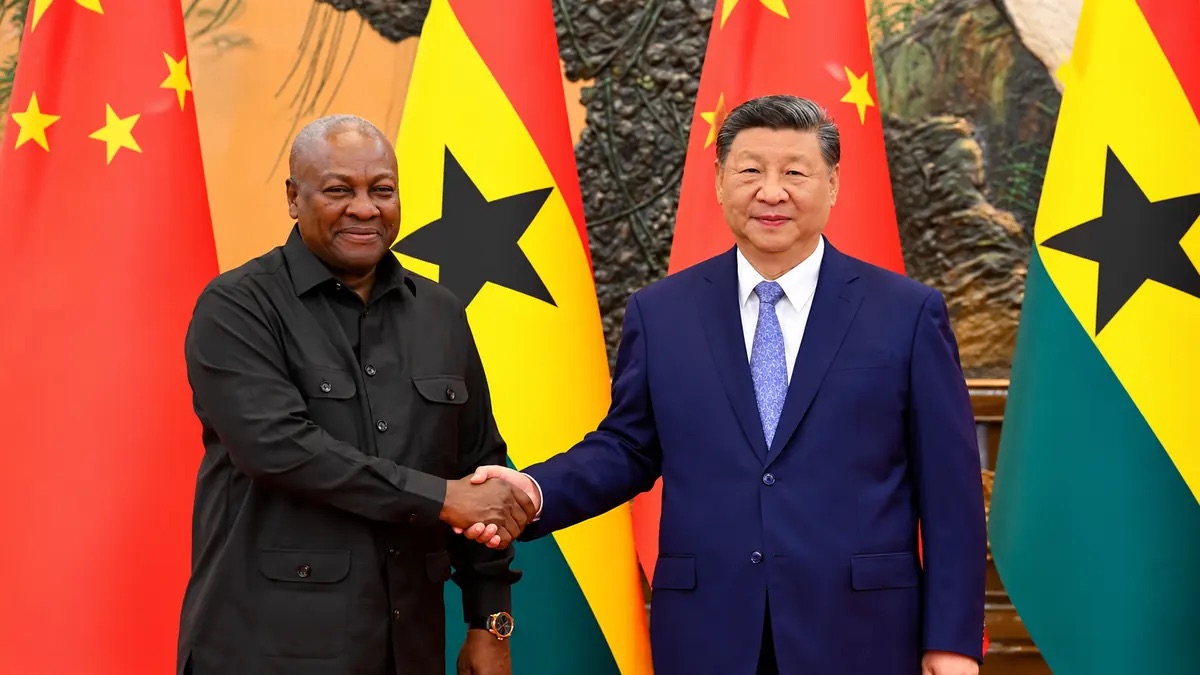
Ghana has taken a significant step towards diversifying its international payment channels after a new arrangement began allowing eligible Ghanaian businesses to initiate payments to Chinese suppliers in Chinese yuan from Ghana cedi accounts.

The arrangement is being piloted by Stanbic Bank Ghana through China’s Cross-Border Interbank Payment System (CIPS), providing businesses involved in Ghana-China trade with a more direct route for settling eligible transactions in yuan.
The development could reduce the need for Ghanaian importers to first source US dollars before paying Chinese suppliers, potentially lowering transaction costs, reducing currency-conversion steps and improving payment efficiency.
According to information published by Stanbic Bank Ghana, customers do not necessarily need a separate yuan account to initiate eligible RMB payments. Customers can use their existing banking channels, select Chinese yuan as the payment currency and submit the required supporting documentation.
Eligible payments submitted with complete documentation by 2:00 p.m. GMT can be processed for settlement by the next business day, subject to regulatory and compliance requirements.
How the cedi-to-yuan payment route works
Under the arrangement, a Ghanaian importer with an eligible transaction can instruct the bank to make payment in Chinese yuan. The bank handles the conversion from cedis into yuan and the payment is subsequently routed through CIPS to the participating Chinese bank.
This means the new arrangement does not mean Ghanaian businesses are sending physical cedis to China. Rather, it creates a more direct financial route in which the customer’s cedi funds are converted into yuan for settlement with the Chinese supplier.
CIPS is China’s cross-border payment infrastructure for transactions denominated in renminbi, also known as the yuan. The system provides an alternative channel for eligible RMB transactions and can reduce dependence on intermediary banks.
For Ghanaian businesses importing machinery, electronics, vehicles, textiles, industrial equipment and other products from China, the development could simplify part of the international payment process.
Dollar payments remain available
The introduction of the cedi-to-yuan route does not mean the US dollar has been removed from Ghana-China trade. Existing international payment channels, including dollar transactions, remain available for eligible businesses and transactions.
Instead, the new arrangement provides another option for companies whose China-related payments qualify for yuan settlement.
Stanbic Bank Ghana has described the CIPS arrangement as a way to make China-related payments more direct, efficient and transparent. The bank says the service is designed for businesses and individuals making eligible payments to China, including trade, education, healthcare and other permitted transactions.
GCB also preparing similar service
Bank of Ghana Governor Dr Johnson Pandit Asiama has indicated that Ghana Commercial Bank (GCB) is also developing a similar arrangement.
The development comes as Ghana continues to strengthen its economic and financial relationship with China, one of the country’s major trading partners.
For businesses and policymakers, the expansion of yuan-based settlement could provide greater flexibility in managing international trade payments while reducing some of the pressure associated with sourcing foreign currency for China-related transactions.
However, the system remains subject to applicable banking regulations, documentation requirements and compliance checks. Not every transaction will automatically qualify for the CIPS route.
The move forms part of a broader conversation around Ghana’s foreign-exchange management, international trade and diversification of payment channels. Readers can follow related developments through the Ghana Media Policy Hub and our Money and Government coverage.
Ghana’s cedi-to-yuan payment route therefore represents an additional option for China-related trade rather than an outright replacement of the US dollar. Its long-term impact will depend on adoption by businesses, transaction volumes, exchange-rate conditions and how the system develops beyond the current pilot arrangement.