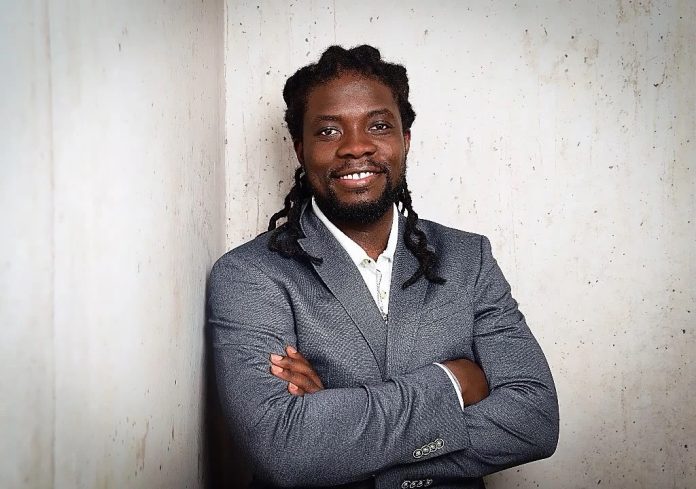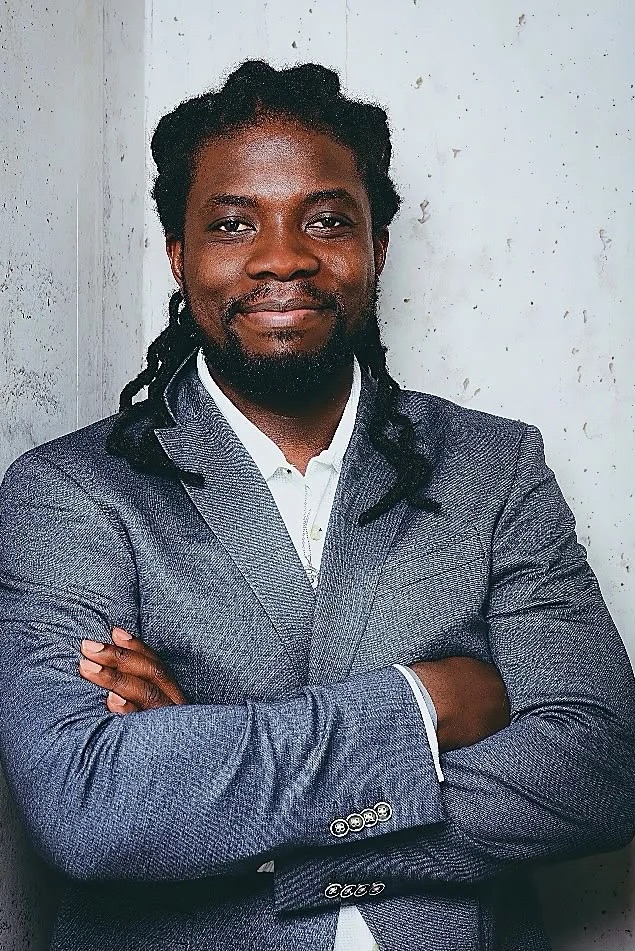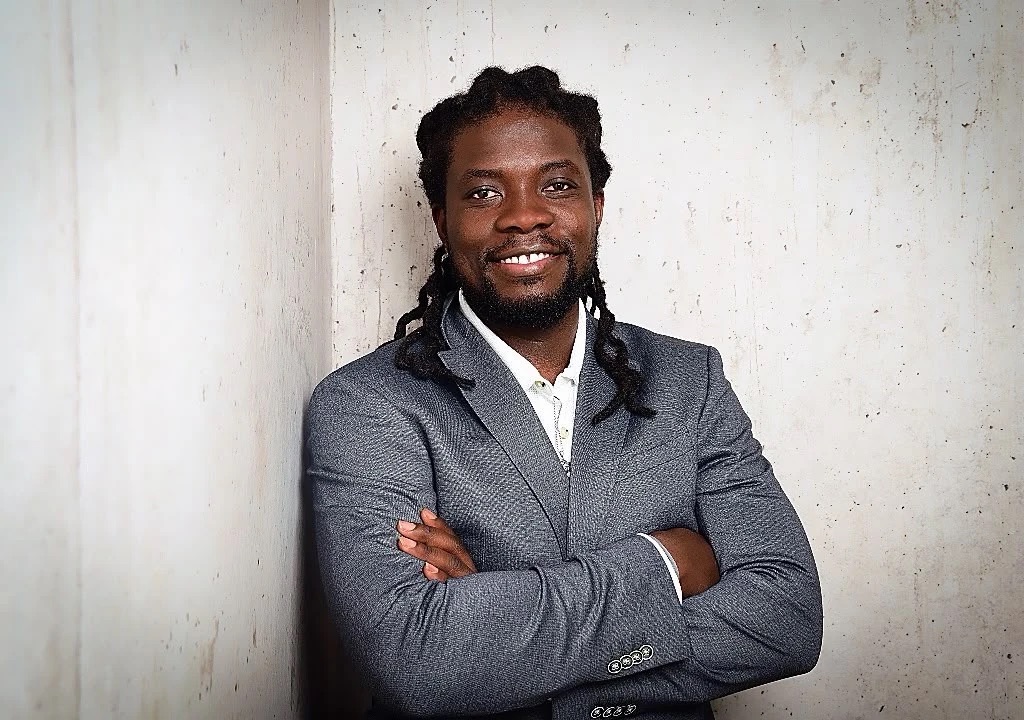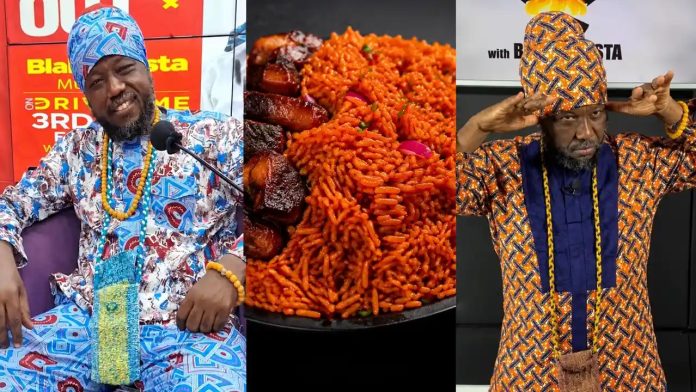
Ghanaian rap heavyweight Strongman, known privately as Osei Kwaku Vincent, has made it clear that he has no intention of jumping on lyrical trends that do not reflect his reality—especially the growing wave of “scammer rap” and drug-influenced music among some emerging artistes.
Speaking in an interview on Angel FM in Kumasi, Strongman emphasized that authenticity remains the backbone of his artistry. For him, rapping about fraud, drugs, or street crime would not only be misleading but also untrue to who he is.
According to Strongman, music is most powerful when it stems from genuine life experiences. That is why he prefers to focus on themes like love, hate, struggle, celebration, and everyday realities that align with his personal journey.
“If I rap about scamming or drugs, it will look funny and fake. I’ve never lived that life,” he said.
Strongman further explained that the environment he stays in naturally filters into his music. His circle, he revealed, is made up of “gentle people” who are not involved in drugs, alcoholism, or criminal behavior. As a result, he doesn’t get exposed to such lifestyles—and he has no desire to falsely portray them in his songs.
“My circle is full of gentle people who don’t even drink alcohol, so they won’t expose me to certain things for me to rap about them,” he added.
The rapper noted that while he enjoys party-themed songs occasionally—especially now that his friends sometimes invite him to social outings—his core will always remain clean, honest, and rooted in personal truth.
Strongman’s stance has been widely praised by fans who see him as one of the few artistes committed to preserving lyrical integrity in the Ghanaian rap space.
Ghanaian rapper and University of Ghana SRC President Guru (Maradona Yeboah Adjei) has declared he is ready to enter mainstream politics on the ticket of the New Patriotic Party (NPP). The musician made the announcement during an interview on Kumasi-based Angel FM, as reported by MyNewsGh. “I am ready for politics now,” he told the programme, while explaining that he avoided talking about internal party leadership because he appeared on the show as a musician, not a political actor.
Guru’s comments included an inadvertent mention of Vice-President Dr. Mahamudu Bawumia, which sparked immediate speculation about which wing of the party he might align with. He quickly steered the conversation back to his music career, saying that while politics is now on his radar, his current focus remains on his craft.
It is important to note the national political context: the National Democratic Congress (NDC), led by President John Dramani Mahama, is the governing party. Mahama won the December 2024 presidential election and was sworn in as president on January 7, 2025. That means the NPP is currently in opposition — so Guru’s decision would be to join the opposition ranks, not the party in government.
Observers say Guru’s move will be closely watched because he combines popular appeal as an entertainer with political experience on campus as SRC President — a profile that could be valuable to any party. Political analysts note that entertainers who cross into politics can bring name recognition and youth appeal, but must quickly build policy credibility to be effective.
What Guru said (highlights)
“I am ready for politics now,” he told Angel FM (as monitored by MyNewsGh). He explained his reluctance to discuss party leadership on the show was because he was appearing in a musical capacity, not as a politician. An accidental mention of Dr. Mahamudu Bawumia sparked speculation about his leanings, but Guru immediately refocused on music.
Former Ghanaian football star Samuel Osei Kuffour has revealed the humorous reason behind his recent haircut, saying he had no choice but to trim his hair because people had started calling him “Papa Shee.” The football icon shared the comment light-heartedly, sparking laughter and reactions across social media.
According to Kuffour, his slightly overgrown hair had become a talking point among fans and friends, many of whom jokingly compared his look to that of the outspoken evangelist Papa Shee. The comparison, he said, became so frequent that he decided it was time for a clean trim.
Speaking casually during a recent interaction, Kuffour explained that he enjoys keeping a simple and neat appearance, but the playful teasing pushed him to visit the barber sooner than planned. His revelation has quickly gone viral, with many fans joking about how Ghanaian society never hesitates to nickname people based on their looks.
Social media users reacted with amusement, praising Kuffour for his sense of humor and ability to laugh at himself. Others acknowledged how common it is for Ghanaians to draw quick resemblances between celebrities and public figures.
Kuffour’s light-hearted moment has once again endeared him to fans, reminding many of his charismatic personality both on and off the field. The former Bayern Munich defender remains one of Ghana’s most respected football figures, and his playful comment has added a fresh wave of admiration and laughter across the online space.
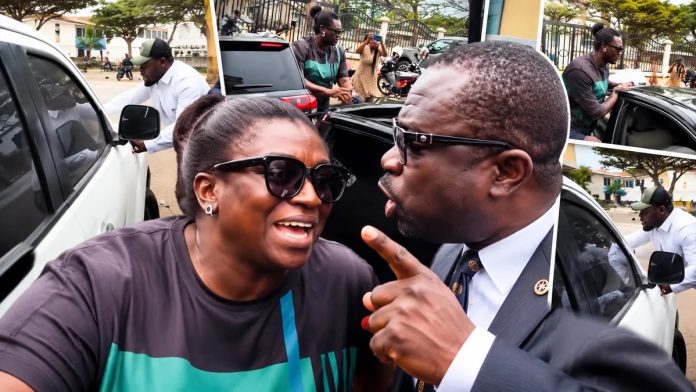
Angel Asiamah left the Amasaman High Court on Thursday in a visibly heavy mood after the judge once again denied bail to his wife, Nana Agradaa, during her ongoing legal battles. The emotional scene unfolded shortly after court proceedings ended, drawing attention from media, onlookers, and supporters gathered outside.
According to eyewitnesses, Asiamah walked out of the courtroom quietly, his demeanor reflecting deep disappointment and frustration. He avoided interviews and moved quickly toward the exit as security escorted him through the crowd.
Inside the courtroom, tension was already high as Agradaa’s legal team argued for bail pending further hearings. However, the judge ruled against the application, insisting that the legal process must continue while the accused remains in custody. The decision triggered a somber reaction among Agradaa’s supporters, many of whom hoped for a different outcome.
Outside, the atmosphere remained heavy as sympathizers expressed concern over the repeated bail refusals. Some supporters attempted to comfort Angel Asiamah, who appeared overwhelmed by the unfolding situation.
The case continues to attract public interest, given Agradaa’s prominence and the intense debate surrounding her charges. With bail once again denied, attention now shifts to the next court date, where her legal team is expected to continue fighting for relief.
Asiamah’s emotional exit from the courthouse reflects the growing pressure and strain the case has placed on the family—an ordeal that shows no signs of slowing down as proceedings continue.
Nigeria’s President Bola Ahmed Tinubu is facing intense criticism after authorizing military intervention in the Republic of Benin to help suppress an attempted coup. The backlash intensified on Sunday after reports confirmed that Nigerian fighter jets and ground forces assisted Beninese authorities in pushing back soldiers who had taken over key national installations.
According to early reports from Parallel Facts, loud explosions and sporadic gunfire erupted at the Tignon Barracks, located about six kilometers from the Cotonou Airport. Investigative researcher Casus Belli revealed that the mutinous soldiers—believed to be behind the coup attempt—had barricaded themselves inside the military facility while attempting to seize broader control of the country.
In response, the Nigerian Air Force launched fighter jet operations, reportedly striking positions occupied by the coup elements near the national television station and a military base. Nigerian ground troops were also deployed as part of a coordinated operation approved by the Beninese Command Authority, raising questions about the extent of Nigeria’s involvement in Benin’s internal conflict.
Tinubu’s decision has triggered widespread condemnation, particularly from international activists and commentators who argue that the Nigerian leader should focus on addressing the terrorism and insecurity plaguing his own country. One of the loudest critics is American political commentator Jackson Hinkle, who described the Benin coup actors as “revolutionaries,” not terrorists. He accused Tinubu of misplacing priorities, stating that Nigeria should “bomb terrorists in its own country, not revolutionaries in Benin.”
This perspective echoes the sentiments of many Nigerians who feel that the administration has not done enough to combat Boko Haram, ISWAP, banditry, and widespread insecurity affecting states across northern and central Nigeria. Critics argue that committing fighter jets and soldiers to a foreign mission—especially during heightened domestic instability—sends the wrong message to Nigerian citizens.
Meanwhile, earlier reports by investigative journalist David Hundeyin added further controversy to the unfolding events. In a post on X, Hundeyin warned that Nigerian Army units stationed at Ojo Barracks in Lagos were allegedly preparing for an unauthorized military incursion into the Benin Republic. He cautioned that such an operation could provoke broader regional instability at a time when West Africa is already grappling with multiple coups, jihadist attacks, and fragile political systems.
The Beninese government, however, maintains that it formally requested Nigerian support after hostile forces seized the national broadcaster and attempted to take control of strategic institutions. Authorities in Cotonou claim that the joint effort helped restore order and prevent the country from falling into the hands of rogue soldiers.
Despite this official justification, the political debate continues to intensify both within Nigeria and across the region. Many fear that Nigeria’s intervention could set a new precedent for cross-border military action in West Africa—potentially escalating tensions at a time when the continent is striving for greater stability.
For now, Tinubu’s administration remains firm in its stance that the action in Benin was necessary to “protect democratic order.” But critics insist that a government burdened by domestic insecurity should prioritize protecting its own citizens before engaging in foreign military campaigns.
Ghana Black Stars midfielder Kwesi Sibo is facing limited playing time at Real Oviedo this season, but sources close to the club insist the situation has nothing to do with his performance. Instead, the issue is tied to an ongoing contract standoff between the player’s camp and the Spanish side.
Sibo, one of Ghana’s promising midfield talents, remains highly rated by Oviedo’s technical team. However, the club is pushing for him to sign a one-year contract extension. His representatives, on the other hand, are advocating for a longer and more financially improved deal that reflects his growing value on the international market.
The midfielder’s current contract is set to run until 27 June 2027, meaning there is still significant time left. Yet, Real Oviedo reportedly wants clarity on his long-term commitment before granting him more minutes on the pitch.
According to transfer insiders, Sibo has attracted strong interest from Italian and Saudi Arabian clubs, both offering competitive packages. Despite this, he is said to prefer staying in Spain, where he has adapted well and continues to develop his game.
For now, Oviedo’s fans and Ghanaian supporters will be hoping the contract impasse is resolved quickly so Sibo can return to full action and maintain his steady rise in European football.
Ghana Black Stars goalkeeper Lawrence Ati-Zigi is once again in the spotlight as fans revisit his impressive rise through the national team ranks. Long before becoming one of Ghana’s most trusted senior goalkeepers, Ati-Zigi stood between the posts when Ghana defeated Panama 1–0 at the FIFA U-20 World Cup.
During that tournament, Ati-Zigi played with remarkable composure and maturity, showcasing the sharp reflexes and confidence that would later define his professional career. The victory over Panama was one of the key moments that highlighted Ghana’s strong youth development and the rich talent pipeline feeding the Black Stars.
That U-20 squad was stacked with promising young players who would eventually graduate to the senior national team, contributing significantly to Ghana’s football growth over the past decade. Ati-Zigi’s consistency—both then and now—continues to make him a symbol of resilience, patience, and long-term development.
Today, the St. Gallen shot-stopper remains a crucial figure for the Black Stars as Ghana prepares for major international competitions, reminding fans that every great journey often begins on youth football’s biggest stages.
Tensions have escalated between Nigeria and Burkina Faso as 11 Nigerian military personnel are reportedly being detained in Bobo-Dioulasso after their C130 cargo aircraft allegedly violated the airspace of the Alliance of Sahel States (AES).
According to reports from the AES, the Nigerian aircraft entered the confederation’s airspace without diplomatic clearance, prompting immediate action from Burkinabè authorities. The plane, carrying 11 crew members, was said to have conducted an emergency landing in the city of Bobo-Dioulasso, where security forces quickly took the soldiers into custody.
Burkina Faso is refusing to release the detained personnel until Abuja provides a full explanation regarding the aircraft’s mission and the reason for entering a restricted zone governed by the AES.
The Alliance of Sahel States, a military and political confederation formed after distancing themselves from ECOWAS, is made up of:
Mali 🇲🇱 Niger 🇳🇪 Burkina Faso 🇧🇫
Diplomatic discussions are expected, but tensions remain high as regional blocs monitor the developing standoff. Nigeria has yet to issue a comprehensive public statement regarding the incident, raising questions about the purpose of the flight and the next steps in resolving the dispute.
The situation adds a new layer to the already complex geopolitical climate in the Sahel, where military alliances, airspace control, and regional autonomy continue to shape West Africa’s security landscape.
Prophet Telvin Sowah Adjei has issued a strong spiritual caution to Ghana, warning that the Black Stars could face major failure at the 2026 FIFA World Cup if any changes are made to the current squad or if head coach Otto Addo is removed before the tournament.
According to the prophet, God has revealed that Ghana’s progress in the upcoming World Cup is tied directly to the present structure of the national team. He emphasized that Tampering with the lineup, replacing key players, or dismissing Otto Addo could destabilize the spiritual balance needed for the team’s success.
In his revelation, Prophet Adjei stated that the Black Stars currently carry a divine alignment that positions them for surprising breakthroughs on the world stage. However, he insists that this alignment is delicate and could easily break if football administrators make rushed decisions, introduce new players without spiritual clearance, or alter the leadership of the team.
He urged the Ghana Football Association (GFA), technical staff, and supporters to “remain calm, focused, and spiritually discerning,” stressing that Ghana’s best chance at a strong World Cup performance lies in maintaining stability and preserving unity within the team.
With the global tournament approaching and expectations rising across the nation, his message adds a new spiritual dimension to the ongoing conversations about player selection, team strategy, and Ghana’s readiness for the June 2026 kickoff.
As fans debate the prophecy, many await the GFA’s response, knowing that the Black Stars’ journey has always been shaped by both football decisions and deep spiritual sentiments across the country.
The Ghana Police Service has successfully rescued a kidnapped victim in the Yendi District after a dramatic armed confrontation with suspected kidnappers. The operation, carried out earlier today at Wapuli, led to the arrest of three individuals following a tense shootout that drew public attention across the Northern Region.
The suspects — 31-year-old Haruna Seidu, Amidu Bande, and 40-year-old Osman Bande — reportedly opened fire on police officers who had tracked their hideout. According to police sources, officers returned fire swiftly and effectively, disarming the suspects and safely extracting the victim without any physical harm.
This development comes after the kidnappers earlier demanded a ransom of GH¢100,000 from the victim’s family. During the rescue operation, police retrieved a bag containing GH¢70,000 in cash, believed to be part of the ransom that had already been handed over under duress.
Despite the successful arrests, one suspect managed to escape the scene. Police indicate that the fugitive may be injured, as he fled with what is suspected to be gunshot wounds. A manhunt has been launched to track down the remaining accomplice, with investigators pursuing multiple leads.
Items recovered from the scene include three motorbikes used by the suspects and a Samsung mobile phone abandoned during the exchange of gunfire. These items are currently being examined as evidence as part of ongoing investigations.
Authorities describe the operation as a major breakthrough in the fight against kidnapping-for-ransom cases, which have been on the rise in parts of the Northern Region. Community members have praised the swift police response, expressing relief that the victim was rescued alive and unharmed.
The three arrested suspects are currently in police custody and are expected to face charges in court in the coming days. Meanwhile, the police have urged the public to report suspicious activities promptly, assuring communities of strengthened security measures and rapid-response interventions.
This incident highlights the growing sophistication of police operations as they continue working to curb violent crime and protect vulnerable communities across the country.