Ghanaian media personality Deloris Frimpong Manso, popularly known as Delay, has reignited debate about age-gap relationships after questioning why wealthy men who date younger women often face less criticism than wealthy women who choose younger male partners.
King Eben Gives Rapido Sports a Platform, 10.2K Live Viewers 2
In a post shared on X on October 10, 2026, Delay posed a pointed question: “Why is it ok for rich men to be with younger women, but taboo for rich women to be with younger men?” Her remarks have drawn attention to the different social expectations often placed on men and women in romantic relationships.
Stay Updated With Ghana Media
Get breaking Ghana news, exclusive stories and important updates directly on WhatsApp.JOIN OUR WHATSAPP CHANNEL
Delay’s question centres on a perceived double standard: older, financially successful men dating younger women are often discussed as a familiar social pattern, while older women in similar relationships can face labels, jokes and criticism.
The discussion raises broader questions about how wealth, age and gender influence public perceptions of romantic partnerships. Critics of the double standard argue that consenting adults should be judged by the quality of their relationships rather than assumptions about who should date whom.
Why Age-Gap Relationships Attract Different Reactions
Traditional expectations about masculinity and femininity can shape how people interpret relationships involving significant age differences. In some settings, an older man with a younger partner may be associated with financial security or status, while an older woman with a younger partner may face unfair assumptions about her motives or desirability.
However, age differences alone do not determine whether a relationship is healthy. Mutual respect, honesty, emotional compatibility, consent and shared expectations matter more than stereotypes about the ages or financial positions of the partners.
Delay, known for her direct commentary on relationships and social issues, has brought the debate back into the public conversation with a question that challenges people to examine whether they apply the same standards to men and women.
Whether people agree with her position or not, the discussion invites a wider reflection on personal choice, gender equality and the pressure public opinion can place on adults navigating relationships. Read more on GhanaMedia.net. For more coverage, visit Ghana News, Ghana News Live and Top Stories.
A claim circulating on social media that Bernard Antwi Boasiako, popularly known as Chairman Wontumi, has been granted GH¢15 million bail is misleading. The amount matches a bail decision reported in October 2025, not confirmation that he has been released from prison following his 2026 conviction.
Fact Check: Has Chairman Wontumi Been Granted GH¢15m Bail? 4
Recent reports dated October 15, 2026, indicate that the Accra High Court is considering Wontumi’s application for bail pending appeal against his 20-year prison sentence for illegal mining-related offences. A report published on October 15 says the court is expected to rule on the application on November 4. The available reports do not confirm that the new application has been granted.
Stay Updated With Ghana Media
Get breaking Ghana news, exclusive stories and important updates directly on WhatsApp.JOIN OUR WHATSAPP CHANNEL
Where Did the GH¢15 Million Figure Come From?
On October 7, 2025, the Accra High Court granted Wontumi GH¢15 million bail in a case involving alleged breaches of mining laws, including facilitating unlicensed mining operations and assigning mineral rights without approval. The court imposed conditions that included three sureties, two of whom were required to justify their sureties with landed property.
Other conditions included surrendering his passport to the court registry, being placed on a stop list at the country’s entry and exit points, and reporting to the case investigator twice monthly. That decision concerned proceedings in 2025 and should not be mistaken for a new bail order in the appeal proceedings following his 2026 conviction.
Wontumi was convicted in July 2026 and sentenced to 20 years’ imprisonment with hard labour over illegal mining-related offences linked to a concession at Samreboi in the Western Region. He is challenging the conviction and sentence and has applied to be released on bail while his appeal is determined.
Bail pending appeal is a separate legal request from the bail granted in the earlier proceedings. The court must consider the current application before any new order can be reported as fact. The Attorney-General has opposed the application, citing concerns that Wontumi could be a flight risk.
As of the latest reports available to Ghana Media, the claim that a fresh GH¢15 million bail order has been granted is not substantiated. Readers should be cautious about posts using old court footage or images to suggest that a new decision has been made.
Ghana Media will update this report if a court order or reliable report confirms the outcome of the current application. Read more on GhanaMedia.net. For continuing coverage, visit Ghana News, Ghana News Live, and Top Stories.
Accra, Ghana — West Hills Mall is set to bring together food, shopping, entertainment and family experiences with the launch of the Chop & Shop Fest beginning October 16, 2026.
The festival is designed to transform the traditional shopping experience by combining retail promotions with culinary experiences, live entertainment and cultural showcases, giving shoppers more reasons to visit, stay longer and enjoy the mall with family and friends.
WEST HILLS MALL BRINGS FOOD, SHOPPING TOGETHER AT CHOP & SHOP FEST 7
The programme will feature food tastings, cooking demonstrations, cultural dining experiences, retail and dining bundles, family activities and live entertainment throughout the campaign period.
Speaking ahead of the festival, Wendy Aryee, Marketing Manager of West Hills Mall, said the initiative reflects the mall’s broader focus on creating experiences that extend beyond shopping.
“At West Hills Mall, we believe a visit to the mall should be about more than simply making a purchase. It should be about creating experiences, spending quality time together and discovering something new. Chop & Shop Fest brings food, shopping, entertainment and culture together in one experience, and we are excited to welcome families and shoppers to enjoy it with us.”
WEST HILLS MALL BRINGS FOOD, SHOPPING TOGETHER AT CHOP & SHOP FEST 8
The festival was also intended to strengthen the mall’s relationship with the wider community. “Food is such an important part of how we connect as people. It brings families and friends together, and it is also a powerful way of celebrating culture. With Chop & Shop Fest, we are creating a space where people can enjoy good food, discover new experiences, support our tenants and simply have a great time together.”
A major feature of the festival will be the Food Court Fiesta, with participating food tenants hosting tasting booths, special discounts and live cooking demonstrations every weekend.
Food outlets including Barcelos, Chicken Inn, The Addo’s and Sizzler will participate in the festival, offering customers opportunities to sample dishes and enjoy special promotions.
Retailers across fashion, electronics, beauty and other categories will also participate through the Chop & Shop Combos, linking retail purchases with dining rewards such as food vouchers.
The festival will also shine a spotlight on food and culture through Cultural Kitchen Days, with weekly showcases of Ghanaian dishes alongside international cuisines and live cooking demonstrations.
Visitors can also expect celebrity cook, DJs, acoustic performances and cultural dance displays, while children will have their own dedicated Family Zone, featuring food-themed games and eating challenges.
With Chop & Shop Fest, West Hills Mall is extending that approach into food and culinary experiences, positioning the festival as a destination for both shopping and leisure
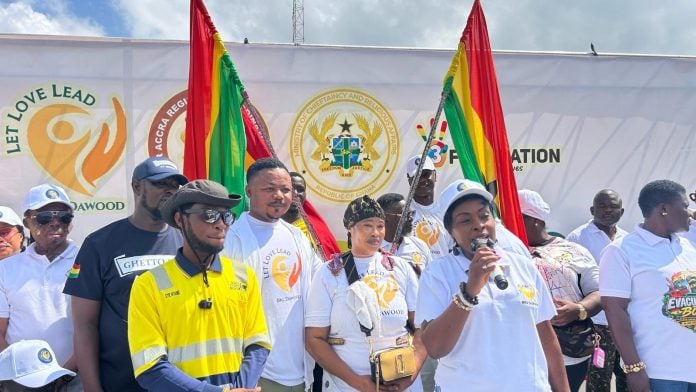
Let Love Lead NGO has mobilised more than 6,500 volunteers in Accra for its Green & Clean Initiative, combining a major environmental sanitation exercise with tree planting and the launch of a long-term campaign to promote cleanliness across Ghana.
Let Love Lead NGO mobilises over 6,500 volunteers for Accra clean-up exercise.
The exercise, held on Wednesday, 7 October 2026, also marked the launch of the organisation’s Culture of Cleanliness Campaign (2027–2032), an initiative designed to make environmental sanitation a sustained national priority through public education, community mobilisation and collective responsibility.
The programme began with solidarity messages from dignitaries and supporters before volunteers embarked on a clean-up procession from the Afrikiko Restaurant area, along Independence Avenue, through the Ako-Adjei Roundabout and towards the State House Forecourt.
Let Love Lead NGO Mobilises 6,500 Volunteers in Accra 12
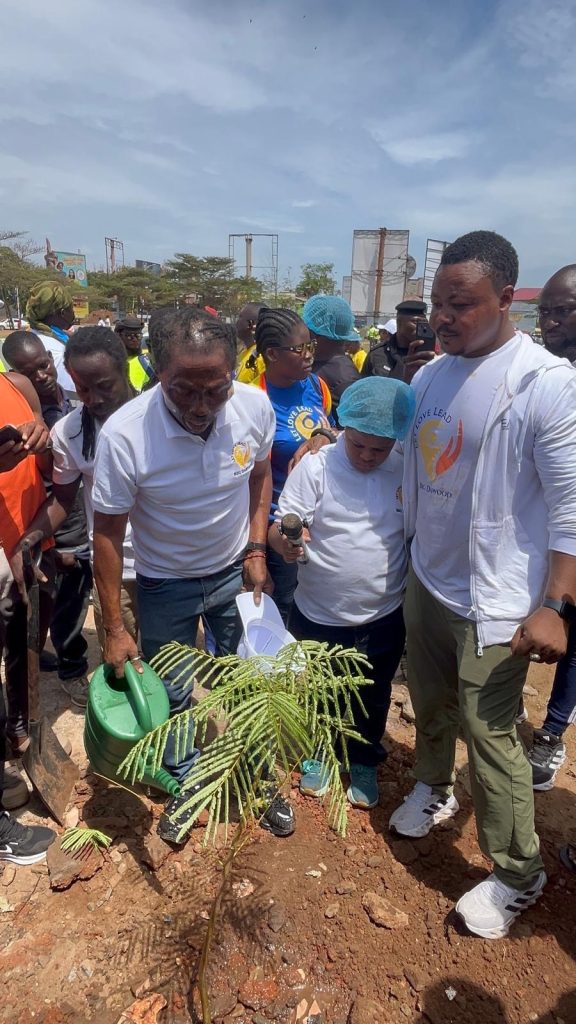
Participants swept roads, collected plastic waste and desilted choked drains along the route. The initiative also featured the planting of more than 20 legacy trees to promote environmental sustainability and encourage long-term responsibility for Ghana’s natural environment.
The turnout brought together community sanitation groups, keep-fit clubs, students, volunteers from South Africa and members of the Ghanaian diaspora. Participating groups included Achimota Keep Fit Club, Abofu Keep Fit Club, Obaana Ladies, BuzStopBoys, Uptown Cleaners, Brush and Broom, Borla Taxi Transport Service, Zero Waste, Action Brothers, Drift Bikers, Sanitation Police, Let’s Clean Kpong and Old Gold Football Club.
Educational institutions also played a significant role, with students from MayFlower International School, Independence Avenue 1 Basic School, Bishop Girls Basic School, Private Odartey Basic School, Accra Sempe Basic School, HOTCASS Basic School, the University of Ghana, the University of Professional Studies, Accra, and Accra Technical University taking part.
Let Love Lead NGO Mobilises 6,500 Volunteers in Accra 13
The initiative attracted support from several public figures and personalities, including music duo Keche Global, legendary musician Akosua Agyapong, Nana Antwi Ofori Boasiako, Langabell, Nana Kwaku Bonsam, Commander Cyborg, Tony Addison Dodoo, Kojo Sarfo, Alhaji Said Sinare, Ralph the Citizen, Hon. Yussif Jajah and Hon. Teddy Safori Addi.
Public institutions supporting the exercise included the Ghana Police Service, National Ambulance Service, Ghana Immigration Service and the National Disaster Management Organisation (NADMO). The Ghana Dance Association, Department of Parks and Gardens, Greater Accra Regional Coordinating Council, and the Korle Klottey, Ayawaso North, Ayawaso Central and Okaikwei North Municipal Assemblies also participated.
Private-sector partners included 3 Foundation, Tasco Security, Verna Water, Everpack, A1 Diesel, Softcare, Incant 2 Solutions, Palace Mall, A-Z and Auto Z. Media organisations TV3, Original TV, Metro TV, GTV, Starr FM and GHOne TV, alongside bloggers, covered the exercise. Media General, Afrikiko Restaurant and the State Protocol Department at the State House also supported the programme.
Dawood Akwesi Agyemang, Founding President of Let Love Lead NGO, popularly known as Big Dawood, led dignitaries in planting legacy trees. He expressed gratitude to the volunteers, partner organisations, public institutions and individuals whose contributions helped make the initiative possible.
Let Love Lead NGO Builds on Previous Sanitation Projects
The Green & Clean Initiative builds on the organisation’s previous environmental sanitation projects, including annual clean-up exercises in Spintex and at Kwame Nkrumah Circle, as well as a major sanitation exercise in Nima that attracted close to 3,000 participants.
The Nima exercise focused on clearing a drainage channel stretching from Nima-Mamobi to the Paloma Hotel area. It combined community mobilisation with practical efforts to improve sanitation and address drainage-related challenges.
Beyond environmental sanitation, Let Love Lead NGO has supported victims of the June 3 disaster and provided assistance to communities affected by flooding in Accra. These interventions reflect the organisation’s wider commitment to addressing environmental challenges and their humanitarian consequences.
Culture of Cleanliness Campaign Targets Sustained National Action
Through its Culture of Cleanliness Campaign (2027–2032), Let Love Lead NGO intends to encourage individuals, communities, public institutions and businesses to make environmental responsibility a consistent part of everyday life.
The campaign places emphasis on sustained public participation, responsible waste management and collective action as essential elements of lasting improvements in sanitation. Its long-term ambition is to encourage a culture in which keeping communities clean becomes a shared responsibility rather than an occasional activity.
The initiative also highlights the role that schools, community groups, businesses, public institutions and civil society organisations can play in promoting cleaner neighbourhoods and protecting the environment for future generations.
As Ghana continues to confront environmental sanitation and drainage challenges, the Green & Clean Initiative seeks to turn public participation into sustained action, with Let Love Lead NGO positioning its 2027–2032 campaign as a platform for long-term community engagement and environmental responsibility.
Ghanaian media personality Deloris Frimpong Manso, popularly known as Delay, has reignited debate about age-gap relationships after questioning why wealthy men who date younger women often face less criticism than wealthy women who choose younger male partners.
Delay Questions Why Rich Women Cannot Date Younger Men 15
In a post shared on X on October 10, 2026, Delay posed a pointed question: “Why is it ok for rich men to be with younger women, but taboo for rich women to be with younger men?” Her remarks have drawn attention to the different social expectations often placed on men and women in romantic relationships.
Stay Updated With Ghana Media
Get breaking Ghana news, exclusive stories and important updates directly on WhatsApp.JOIN OUR WHATSAPP CHANNEL
Delay’s question centres on a perceived double standard: older, financially successful men dating younger women are often discussed as a familiar social pattern, while older women in similar relationships can face labels, jokes and criticism.
The discussion raises broader questions about how wealth, age and gender influence public perceptions of romantic partnerships. Critics of the double standard argue that consenting adults should be judged by the quality of their relationships rather than assumptions about who should date whom.
Why Age-Gap Relationships Attract Different Reactions
Traditional expectations about masculinity and femininity can shape how people interpret relationships involving significant age differences. In some settings, an older man with a younger partner may be associated with financial security or status, while an older woman with a younger partner may face unfair assumptions about her motives or desirability.
However, age differences alone do not determine whether a relationship is healthy. Mutual respect, honesty, emotional compatibility, consent and shared expectations matter more than stereotypes about the ages or financial positions of the partners.
Delay, known for her direct commentary on relationships and social issues, has brought the debate back into the public conversation with a question that challenges people to examine whether they apply the same standards to men and women.
Whether people agree with her position or not, the discussion invites a wider reflection on personal choice, gender equality and the pressure public opinion can place on adults navigating relationships. Read more on GhanaMedia.net. For more coverage, visit Ghana News, Ghana News Live and Top Stories.
American reality television personality Mackayla “Kash” Paige has died after being shot outside a nightclub in Oakland, California, at the age of 29. Her death has left family members, friends and fans mourning as police investigate the fatal shooting.
Kash Paige Shot Dead at 29 Outside Oakland Nightclub 17
Paige, who appeared on reality shows including Young & Reckless and Real West Coast Baddies, was reportedly shot in the early hours of Sunday, October 11, 2026, near 14th and Harrison streets in downtown Oakland. Authorities confirmed her identity, while her family has begun speaking publicly about the loss.
Stay Updated With Ghana Media
Get breaking Ghana news, exclusive stories and important updates directly on WhatsApp.JOIN OUR WHATSAPP CHANNEL
What Happened Outside the Nightclub?
According to reports citing Oakland police, officers responded to a shooting shortly after 1:30 a.m. on Sunday. Paige was found with gunshot wounds and taken to hospital, where she later died. Investigators are working to establish the circumstances that led to the fatal encounter.
Police have reportedly arrested a woman in connection with the killing. As of the latest reports, authorities had not publicly identified the suspect or disclosed a confirmed motive. The investigation remains ongoing, and the circumstances surrounding the shooting should not be treated as settled until investigators establish the facts.
Family Speaks Out After Kash Paige’s Death
Paige’s cousin, Azima King, spoke about the family’s grief in comments reported by ABC7 News Bay Area. King described being devastated by the loss and said Paige had big dreams and wanted to build a better future for herself.
Her words offered a glimpse into the ambitions Paige held beyond her television appearances. The family’s tribute has resonated with supporters who have shared messages of condolence following news of her death.
Reality TV Network Pays Tribute
Paige had built a public profile through appearances on programmes associated with the streaming network Now That’s TV, including Young & Reckless and Real West Coast Baddies. The network paid tribute to her following the news, remembering her as part of its television community.
Her death has also drawn attention to the continuing investigation into violence in downtown Oakland. Police have appealed for information that could help clarify what happened before the shooting. No motive should be assumed while the case remains under investigation.
Ghana Media will continue to follow credible updates as more information becomes available. Read more on GhanaMedia.net. For more international coverage, visit Ghana News, Ghana News Live and Top Stories.
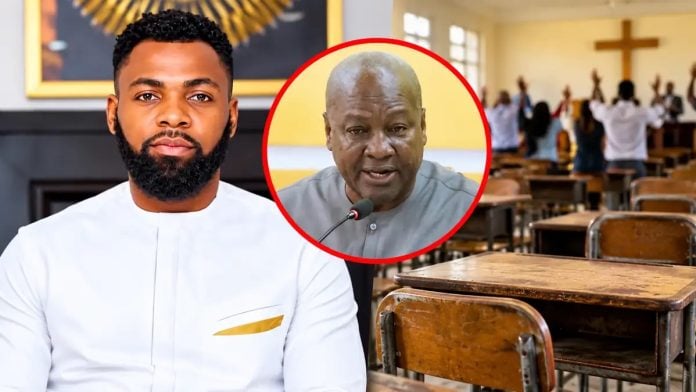
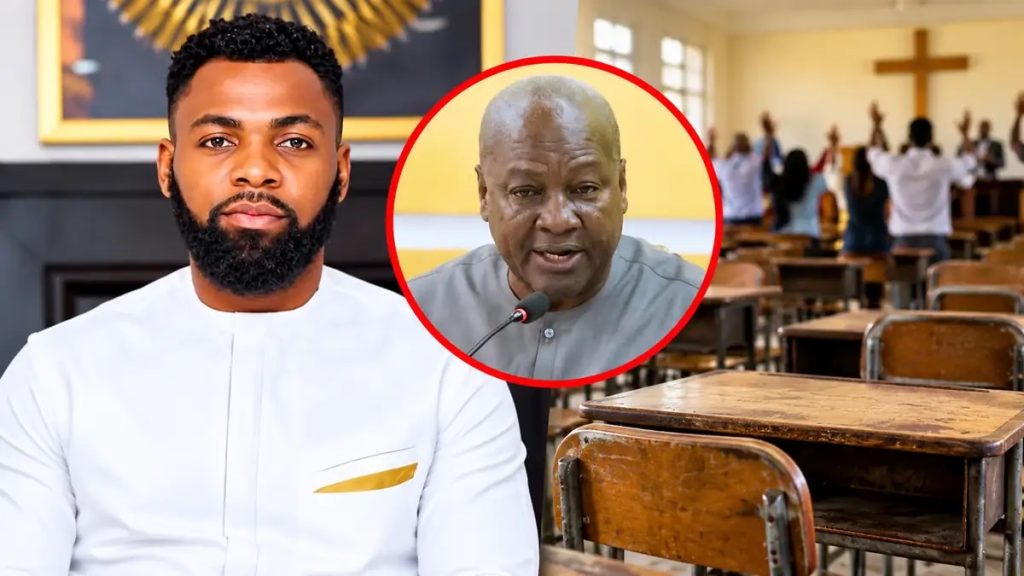
A graphic circulating online attributes a call to President John Dramani Mahama to ban church services in school classrooms to Rev. Isaac Obofour, arguing that worship activities can damage desks and chairs intended for pupils. Ghana Media has not independently verified the exact quotation or located the original recording in which the statement was allegedly made.
Rev. Obofour’s Alleged Classroom Church Ban Call Sparks Debate 19
The issue, however, touches on a longstanding debate in Ghana over the use of public school facilities for religious activities, particularly where classroom furniture, school infrastructure and the preparation of learning spaces are concerned. Any claim about Rev. Obofour’s specific remarks should be treated cautiously until a credible source confirms the attribution.
Stay Updated With Ghana Media
Get breaking Ghana news, exclusive stories and important updates directly on WhatsApp.JOIN OUR WHATSAPP CHANNEL
Concerns about churches using classrooms are not new. In February 2023, the Accra mayor called on churches occupying unfinished public school buildings for worship to stop the practice or face possible legal action. Earlier, education authorities in Sekondi-Takoradi also raised concerns about damage to school property and disruptions to academic activities linked to religious services in classrooms.
At the centre of the debate is the responsibility to protect public property while ensuring that school facilities remain available for their primary purpose: teaching and learning. Moving desks, chairs and other classroom materials repeatedly can create maintenance challenges, especially in schools already facing shortages of furniture and infrastructure.
At the same time, any policy response must consider existing regulations, the responsibilities of school authorities and the rights of religious groups. Clear permission procedures, agreements on facility use and accountability for any damage could help prevent disputes where temporary use of school premises is permitted.
President Mahama has highlighted the need to improve school infrastructure and provide more desks and chairs. Protecting existing furniture is therefore an important part of the wider effort to improve learning conditions. The debate should focus on evidence, fair enforcement and the best interests of pupils rather than unverified quotations circulating online.
Ghana Media will update this report if the original recording or a reliable source confirming the statement attributed to Rev. Obofour becomes available. Read more on GhanaMedia.net. For more coverage, visit Ghana News, Ghana News Live, and Top Stories.
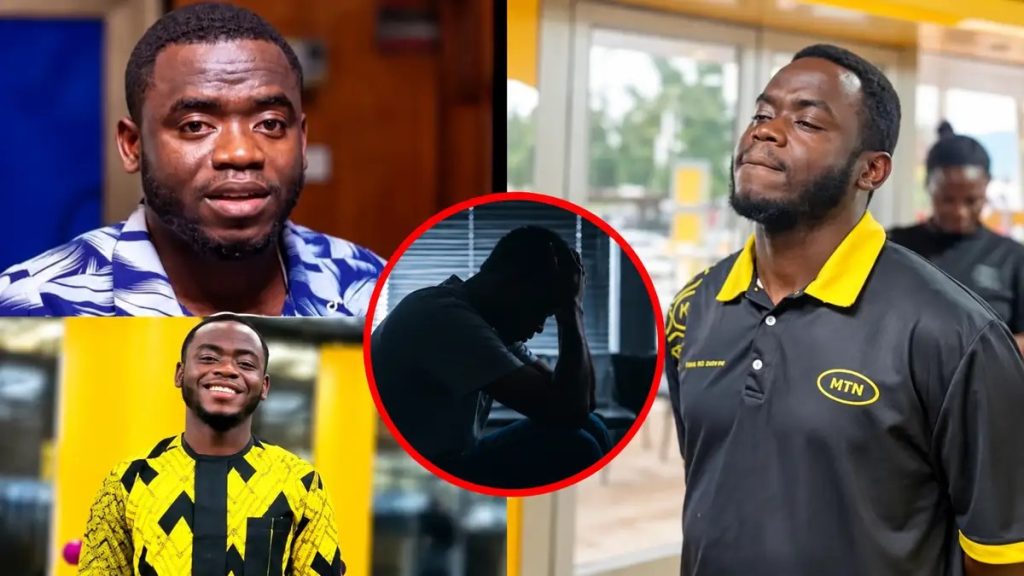
Fresh media reports about the reported death of Bright Gyan Koomson, a former MTN employee and member of Wesley Methodist Cathedral, have renewed public discussion about mental health, addiction and the importance of taking people’s emotional struggles seriously.
Bright Gyan Koomson Reports Renew Ghana Mental Health Debate 21
Reports published on October 13, 2026, describe a note reportedly attributed to Koomson and dated September 30. According to the accounts, the note referred to personal difficulties, emotional distress, addiction and financial pressure. Ghana Media has not independently authenticated the note or verified every detail circulating about his circumstances.
Stay Updated With Ghana Media
Get breaking Ghana news, exclusive stories and important updates directly on WhatsApp.JOIN OUR WHATSAPP CHANNEL
The reports have prompted renewed calls for families, friends, workplaces and faith communities to create environments where people can speak about personal difficulties without ridicule or judgement. Someone’s outward appearance or ability to continue working does not necessarily reveal what they may be experiencing privately.
One important lesson from the message described in media coverage is the need to listen when someone says they are struggling. Dismissing such disclosures as jokes, weakness or attention-seeking can make it harder for people to seek support. Listening compassionately does not require having every answer; it means taking concerns seriously and helping the person find appropriate assistance.
People experiencing emotional distress or worried about someone close to them should consider reaching out to a qualified mental health professional or a trusted health service. Pulse Ghana has reported Ghana’s Mental Health Authority toll-free helpline as 0800 678 678; readers should verify its current availability before relying on it for urgent assistance.
Ghana Media’s earlier report, Bright Gyan Koomson Death Report Remains Unverified Amid Viral Claims, addressed the lack of reliable confirmation available at the time. Subsequent media coverage has added further reporting, but claims about the note and the circumstances surrounding the death should continue to be attributed carefully until independently confirmed.
The wider conversation must remain focused on compassion, responsible reporting and access to support—not speculation, blame or the circulation of unverified personal details. Read more on GhanaMedia.net.
Bishop Daniel Obinim has publicly discussed alleged financial and property demands attributed to his estranged wife, gospel musician Florence Obinim, amid their reported divorce proceedings. The claims have attracted widespread attention after the founder of International God’s Way Church reportedly read from what appeared to be a court document during a church service in Tema.
OBINIM DIVORCE CLAIMS: SETTLEMENT FIGURES DIFFER
Reports published on October 13, 2026, say the alleged demands include a cash payment, properties in Ghana and Spain, the Tema church property and recurring financial support. However, media accounts disagree on the amount involved: some report GH¢2 million, while others state GH¢20 million. Ghana Media has not independently examined the underlying court document to resolve the discrepancy.
Stay Updated With Ghana Media
Get breaking Ghana news, exclusive stories and important updates directly on WhatsApp.JOIN OUR WHATSAPP CHANNEL
According to the published accounts, the properties allegedly mentioned include a residence in Barcelona, Spain, an apartment complex, a guesthouse and the International God’s Way Church building in Tema. Reports also attribute to the alleged demands a recurring payment of GH¢10,000, although outlets differ on the stated purpose and frequency of that support. These details remain claims reported from the material discussed publicly by Obinim, not independently verified court findings.
The reports have also drawn public discussion about the decision to address a private marital dispute during a church service. Reactions have focused on the handling of family matters in a religious setting, as well as the reported financial and property claims.
It is important to distinguish between demands allegedly made during divorce proceedings and a final settlement. A request for money or property does not establish that the other party has agreed to it, nor does it mean a court has ordered the transfer of any asset. The final position can only be established through reliable documentation and the appropriate legal process.
Ghana Media has not independently confirmed the exact terms of the alleged document, the disputed cash amount or the ultimate status of the proceedings. Further reporting should therefore rely on verified court records or on-the-record statements from the parties or their authorised representatives.
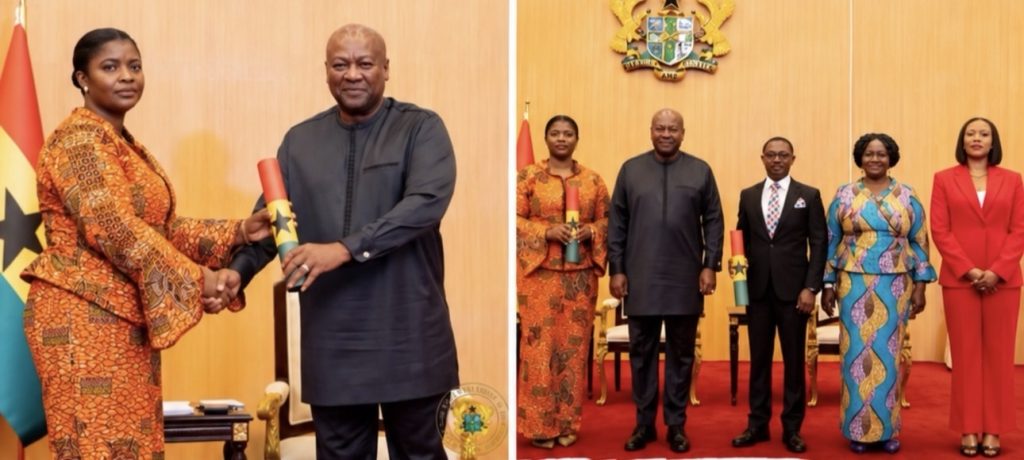
President John Dramani Mahama has sworn in two new Deputy Chairpersons of Ghana’s Electoral Commission (EC), urging them to discharge their constitutional responsibilities with integrity, impartiality and strict adherence to the law.
Mahama Swears In Two New Electoral Commission Deputy Chairs 24
The newly sworn-in officials are Emelia Afi Agbenyo and Dr Joseph Kwaku Asamoah. The ceremony took place at the Presidency in Accra on Monday, October 12, 2026, completing vacancies in the Electoral Commission’s senior leadership.
Stay Updated With Ghana Media
Get breaking Ghana news, exclusive stories and important updates directly on WhatsApp.JOIN OUR WHATSAPP CHANNEL
President Mahama called on the new deputy chairpersons to ensure that every eligible citizen could participate in the electoral process and that every valid vote counted. He stressed that the Commission must apply the same standards to all political parties and candidates, including his own government and party, without preferential treatment.
The President said the authority attached to the offices must be exercised with fairness, restraint and fidelity to the law. He also urged the officials to uphold what was right, even when doing so might be inconvenient for people in positions of power.
He encouraged the new leadership to maintain constructive engagement with political parties, civil society organisations, the media and citizens. He emphasised that public confidence depends on transparent procedures, accountability, timely responses to concerns and the fair handling of electoral matters.
President Mahama further highlighted the importance of sustained preparation for credible elections, including accurate records, trained officials, reliable logistics, secure systems and careful resource management. He also called for measures to remove barriers that prevent eligible citizens, including persons with disabilities, older people and residents of remote communities, from participating fully in the electoral process.
Dr Joseph Kwaku Asamoah previously served the Electoral Commission as Director of Finance and held other positions, including Director of the Training Centre and Head of Audit. He is also a lawyer, chartered accountant and lecturer at the Kwame Nkrumah University of Science and Technology (KNUST), with experience in electoral administration and public service.
Emelia Afi Agbenyo previously served as Deputy Director of Operations at the Ghana TVET Service. Her professional experience includes work in technical and vocational education and international development.
The appointments follow the departure of two former deputy chairpersons. Dr Bossman Eric Asare, who was responsible for Corporate Affairs, resigned effective July 31, 2026, to return to academia at the University of Ghana. Samuel Tettey, who oversaw Operations, left the Commission after reaching the mandatory retirement age.
The new leadership assumes office at a time when electoral transparency, public trust and institutional accountability remain central to Ghana’s democratic process. The effectiveness of the Commission will depend on its ability to administer electoral procedures fairly, communicate decisions clearly and ensure that the rights of voters are protected.