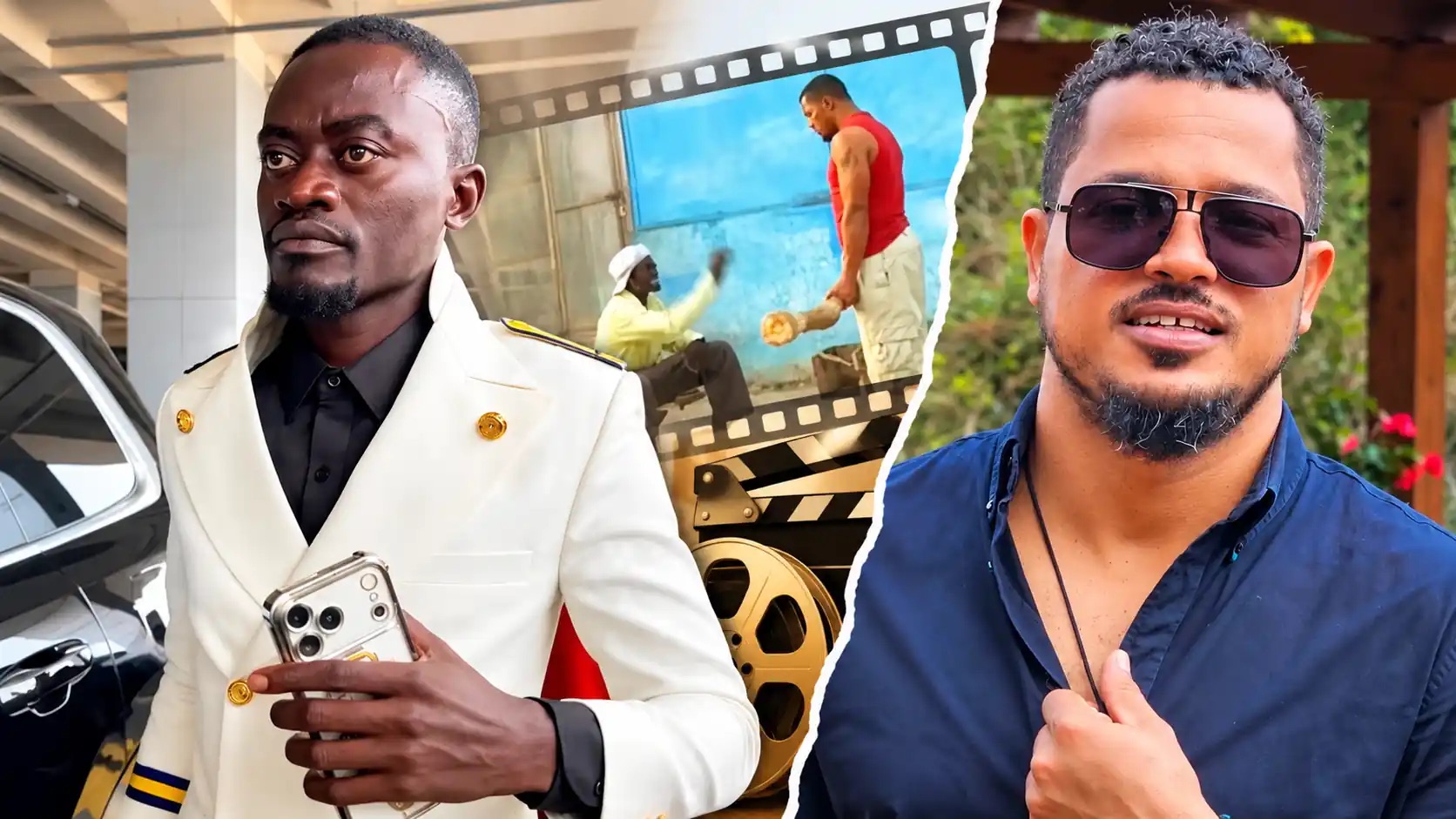
Ghanaian actor Van Vicker has broken his silence on his latest dispute with fellow actor and filmmaker Kwadwo Nkansah Lil Win, offering his side of the story surrounding a proposed movie project.
The controversy has renewed attention on the relationship between the two prominent figures in Ghana’s movie industry, following public comments from both actors over their professional dealings.
According to reports on Van Vicker’s latest comments, the actor said the disagreement centred partly on the terms of a proposed production that would have required him to commit about 20 days to filming.
Van Vicker reportedly maintained that the payment being offered did not adequately reflect the amount of time and professional commitment expected from him. He therefore decided not to proceed with the arrangement.
The latest dispute echoes an earlier disagreement over Lil Win’s A Country Called Ghana. In 2024, Van Vicker explained that he had proposed completing his scenes within 10 days because of his academic commitments, while the production initially wanted him for a longer period. He later noted that Nigerian actor Ramsey Nouah ultimately completed the role within the 10-day period he had proposed.
More recently, Lil Win has accused Van Vicker of repeatedly turning down opportunities to feature in his productions and said he no longer wanted to work with him. Van Vicker has rejected the characterization that he simply rejected Lil Win’s movie projects.
The disagreement has now developed into a wider conversation among entertainment followers about remuneration, shooting schedules, professional communication and the working relationship between major figures in Ghana’s film industry.
While both actors have presented their respective positions, the claims remain statements from the individuals involved and should not be treated as an independently established account of every aspect of their dealings.
The renewed controversy has also intensified interest in the relationship between Ghana’s Kumawood industry and the wider African film market, particularly as Ghanaian and Nigerian actors continue to collaborate on major productions.