Young Ghanaian content creator Abena Little (@abenalittle25) is attracting fresh attention online after teaming up with popular content creator Donske in a collaboration that has sparked reactions across social media.
Abena Little, who is based in Mankessim in the Central Region of Ghana, has continued to build a growing presence online through her entertaining and engaging content.
Her latest collaboration with Donske has further pushed her into the spotlight, with the trending video generating conversations among social media users and attracting reactions from prominent Ghanaian personalities.
Donske, who is based in the Greater Accra Region, is a widely followed Ghanaian digital creator with a particularly strong presence on TikTok. His large online audience has helped give the collaboration additional visibility.
Celebrity reactions add momentum
The trending collaboration has also caught the attention of some of Ghana’s well-known entertainment personalities.
Dancehall musician Shatta Wale and renowned Ghanaian DJ and musician DJ Vyrusky were among those who reacted to the video, adding further momentum to the growing online conversation.
Their reactions have helped expose the collaboration to an even wider audience and underline the increasing influence of Ghana’s digital creators.
Abena Little’s rising profile
For Abena Little, the collaboration represents another notable moment in what is becoming a promising journey in Ghana’s fast-growing creator economy.
The young creator has been steadily gaining recognition for her personality-driven content and ability to connect with audiences online. Her growing visibility also reflects the opportunities available to young Ghanaian creators who are using social media platforms to build personal brands and reach audiences beyond their immediate communities.
Her collaboration with Donske could provide another significant boost as she continues developing her presence across multiple platforms.
Abena Little is active on Instagram, TikTok, Facebook, YouTube and X, where followers can find more of her content.
As the collaboration continues to circulate online, reactions from viewers and public figures suggest that Abena Little is becoming a creator to watch in Ghana’s increasingly competitive digital entertainment space.
A senior New Patriotic Party (NPP) figure popularly known as Chairman Buga has reportedly questioned the 20-year prison sentence handed to former Ashanti Regional Chairman Bernard Antwi-Boasiako, popularly known as Chairman Wontumi.
In remarks circulating online, Buga is heard questioning the length of Wontumi’s sentence and raising concerns about the effect of a prolonged prison term on his family and children.
The comment comes amid continued political and public debate over Wontumi’s conviction and imprisonment.
Wontumi’s 20-year sentence
On July 20, 2026, an Accra High Court sentenced Wontumi to 20 years’ imprisonment with hard labour after finding him guilty of offences connected to illegal mining operations on the Samreboi concession in the Western Region. The court imposed two 20-year custodial sentences, but ordered them to run concurrently, meaning the effective sentence is 20 years.
The court also imposed fines on Wontumi and Akonta Mining Company Limited.
The prosecution’s case centred on allegations that mineral rights connected to the concession were assigned without the required ministerial approval and that Wontumi deliberately facilitated unlicensed mining operations.
NPP challenges the conviction
The NPP has rejected the judgment and announced plans to challenge the conviction.
The party’s General Secretary, Justice Frimpong Koduah, described the judgment as fundamentally flawed and said the party would pursue an appeal.
Wontumi’s legal team has subsequently filed an application seeking bail pending the appeal. However, the application was adjourned to October 15, 2026, after the judge scheduled to hear it became indisposed.
Wontumi remains in custody at Nsawam Medium Security Prison while the legal process continues.
Debate over the sentence
The case has generated strong reactions across Ghana, with supporters and political actors expressing differing views about the conviction and punishment.
Some critics of the sentence have questioned whether 20 years is proportionate, while others have argued that serious sanctions are necessary to deter illegal mining and protect Ghana’s forests, water bodies and mineral resources.
Buga’s reported comments add another dimension to the debate, focusing not only on the legal consequences but also on the personal and family impact of a lengthy prison sentence.
The case remains subject to the appellate process, meaning the final legal outcome could still change.
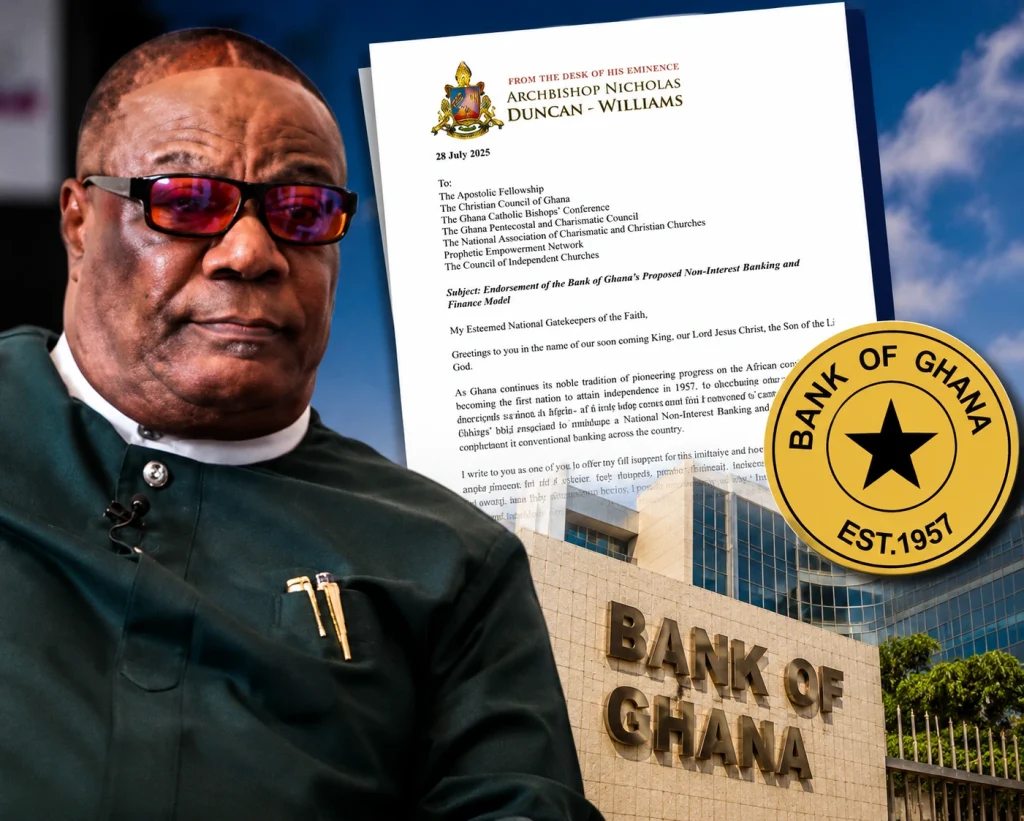
A document circulating online and dated July 28, 2025, purports to show Archbishop Nicholas Duncan-Williams expressing support for the Bank of Ghana’s proposed Non-Interest Banking and Finance model.
The letter, addressed to major Christian bodies including the Christian Council of Ghana, the Ghana Catholic Bishops’ Conference, the Ghana Pentecostal and Charismatic Council and the National Association of Charismatic and Christian Churches, is titled “Endorsement of the Bank of Ghana’s Proposed Non-Interest Banking and Finance Model.”
According to the document, Duncan-Williams urged church leaders to support the initiative, describing it as an opportunity to develop a Ghanaian financial model grounded in what he characterised as faith, ethical values, transparency and inclusion.
However, GhanaMedia.nethas not independently verified the authenticity of the circulating letter or confirmed that it was officially issued by the Archbishop’s office. The claims in the document should therefore be treated as allegations until the original document or an authoritative confirmation is available.
Ghana already moving toward non-interest banking
The broader policy initiative referenced in the document is genuine.
The Bank of Ghana has been developing a regulatory framework for Non-Interest Banking and Finance (NIBF), with the central bank moving toward allowing conventional banks to establish non-interest banking windows as well as licensing fully fledged institutions dedicated to the model.
The framework follows Ghana’s existing legal provisions under the Banks and Specialised Deposit-Taking Institutions Act, 2016 (Act 930). In December 2025, the Bank of Ghana published an exposure draft of guidelines for the regulation and supervision of non-interest banking and finance.
Archbishop Duncan-Williams Reportedly Endorses Bank of Ghana’s Proposed Non-Interest Banking Model 2
The proposed system is intended to broaden financial inclusion and provide alternative financial products based on asset-backed and other non-interest structures.
Why the proposal matters
Non-interest banking is commonly associated with Islamic finance principles, including restrictions on interest-based transactions and greater emphasis on transactions linked to real economic activity.
However, Ghana’s regulatory approach deliberately uses the broader term “Non-Interest Banking” rather than simply “Islamic banking.” The stated objective is to create a framework that is accessible across Ghana’s religious and financial landscape rather than presenting the system as belonging exclusively to one faith.
The Bank of Ghana has also indicated that institutions operating under the framework will require appropriate governance, risk management, compliance and internal expertise before offering such products.
Duncan-Williams’ reported position
The circulating document attributes several arguments to Archbishop Duncan-Williams, including the view that Ghana should develop financial systems that reflect the country’s own values rather than simply copying foreign models.
The letter also appears to argue that a non-interest financial system could contribute to financial inclusion while promoting ethical approaches to wealth creation and investment.
If authentic, the intervention would represent a notable contribution to Ghana’s ongoing debate about how non-interest finance should be implemented.
Duncan-Williams has historically been an influential voice on national economic, political and social issues. Academic research has documented his longstanding engagement with national governance and economic questions, including previous public interventions concerning Ghana’s economy and financial conditions.
Questions surrounding the proposed model
The introduction of non-interest banking has also generated debate among financial experts.
Policy analyst Bright Simons has raised concerns about whether Ghana’s legal and judicial systems have sufficient expertise to handle disputes involving financial contracts based on Islamic finance principles. He has also questioned aspects of the proposed governance and regulatory arrangements.
Other stakeholders have stressed the importance of strong reporting, transparency, governance and consumer protection as Ghana prepares to operationalise the framework.
These issues will be important if non-interest banking is to gain public confidence and become a meaningful part of Ghana’s financial system.
A developing financial debate
Ghana’s move toward non-interest banking comes as policymakers seek to diversify financial products, deepen inclusion and attract new forms of investment.
The proposed framework could eventually give businesses and individuals additional financing and investment options, but its success will depend on effective regulation, public education, professional capacity and confidence in the institutions implementing it.
For now, the reported Duncan-Williams endorsement adds another layer to an already significant national conversation—but the authenticity of the specific letter circulating online remains to be independently established.
A 21-year-old British-Ghanaian man, Carsten Kyei, has been convicted for his role in a major plot to smuggle cannabis worth an estimated £13.8 million into the United Kingdom through Birmingham Airport.
Kyei, from Newham in East London, was one of 11 couriers involved in the operation, which was uncovered after Border Force officers intercepted the group at Birmingham Airport in August 2024. The couriers had travelled from Thailand via Paris Charles de Gaulle Airport.
British-Ghanaian Man Convicted in £13.8m Cannabis Smuggling Plot Through Birmingham Airport 4
Investigators found cannabis packed inside 22 suitcases. According to the National Crime Agency (NCA), the total haul weighed about 460 kilograms, with each courier carrying two suitcases containing roughly 20 kilograms of vacuum-packed cannabis concealed beneath a thin layer of clothing.
The luggage was reportedly so heavy that the couriers had to pay excess baggage charges at Bangkok Airport before the suitcases could be placed in the aircraft hold.
Eight of the suitcases also contained Apple AirTag trackers, which investigators established were linked to the same Apple ID account. The tracking devices formed part of evidence highlighting the level of coordination behind the attempted importation.
Border Force officers became suspicious after establishing that four passengers had travelled from Birmingham to Paris Charles de Gaulle earlier on August 9, 2024, with each carrying two large suitcases. Officers subsequently increased staffing at the Nothing to Declare channel and intercepted the group.
Kyei and fellow courier Nathan Vitorino were convicted on May 26, 2026, following a three-week trial. Other members of the group either pleaded guilty or were convicted following subsequent proceedings.
The NCA said the group had been involved in a sophisticated attempt to bring hundreds of kilograms of cannabis into the UK, warning that people recruited as drug couriers face serious criminal consequences.
Kyei is scheduled to be sentenced at Birmingham Crown Court on September 3, alongside other members of the group whose convictions were completed earlier in the proceedings. Three other defendants convicted following a later trial are due to be sentenced on October 22.
The case has also prompted renewed warnings from UK authorities about young people being recruited to transport drugs internationally. The NCA has launched a campaign highlighting the risks associated with carrying cannabis from Thailand to the UK, including the possibility of lengthy imprisonment and lasting damage to employment prospects.
The convictions underline the increasing scrutiny facing international drug-smuggling networks and the risks faced by individuals recruited to act as couriers.
Ghana’s younger generation is changing the traditional meaning of financial security. For many Gen Zs and Millennials, building wealth is no longer simply about earning a salary, keeping money in a bank account and waiting for retirement. It is increasingly about creating multiple income streams, investing intentionally, using technology and finding a balance between present enjoyment and future security.
This shift is taking place against a dramatically different economic backdrop from the one many young Ghanaians inherited.
A New Generation of Financial Habits
Consider Melissa, a 24-year-old professional in Accra. She has a regular job but does not depend entirely on her salary. On weekends, she runs a small meal-preparation business that accepts mobile-money payments.
She maintains an emergency fund and directs part of her income into a money-market fund and another portion into a fixed-income investment.
When she receives a bonus or unexpected income, she divides it between business expansion, long-term savings and personal enjoyment.
Melissa is an illustrative example of a financial mindset increasingly visible among young Ghanaians: earn from multiple sources, protect against uncertainty, invest for the future and still enjoy the present.
But the reality is that many young people are yet to make the transition from saving to formal investing.
KPMG’s 2025 West Africa Banking Industry Customer Experience Survey found that 43% of Gen Z respondents in Ghana reported that they did not invest, while the corresponding figure for Millennials was 35%. The report linked Gen Z’s lower participation partly to their preference for immediate and flexible income sources, including side hustles.
That gap represents both a challenge and an opportunity for Ghana’s financial sector.
From One Paycheque to Multiple Income Streams
Walk through the University of Ghana, UPSA, KNUST or other tertiary campuses and the emerging youth economy is difficult to miss.
Students operate online thrift businesses. Creatives freelance between projects. Young professionals sell products through social media, run food businesses, create digital content, drive for ride-hailing platforms or provide services online.
Mobile money has made many of these businesses easier to operate.
For a generation facing changing employment patterns and rising expectations, the traditional idea of having one employer for decades is increasingly being replaced by a portfolio approach to income.
The objective is not necessarily to abandon formal employment. Rather, it is to supplement it.
A salary provides stability. A side business can provide additional cash flow. Investments can provide long-term asset growth.
Together, these can create a more resilient financial structure.
Ghana’s Economic Reality Is Shaping Youth Finance
Young people’s financial decisions cannot be separated from the wider economy.
Ghana has experienced a dramatic improvement in inflation from the exceptionally high levels seen during the recent economic crisis. But the environment continues to influence how households think about money.
Headline inflation fell to 3.2% in March 2026 before rising modestly to 3.4% in April. By July 2026, the Ghana Statistical Service reported inflation at 4.6%.
The change matters because inflation determines the purchasing power of money.
When inflation was running at much higher levels, simply keeping cash idle could mean losing significant purchasing power over time. The recent moderation provides relief, but it does not eliminate the need for disciplined financial planning.
For younger investors, the question has therefore evolved from “How much can I save?” to “Where should I put the money I save?”
Treasury Bills Are No Longer Offering the Same Returns
The changing interest-rate environment is also reshaping investment decisions.
Bank of Ghana data show just how sharply Treasury bill yields have fallen from the extraordinary levels seen during the recent economic crisis. In April 2026, the interest-equivalent rates were around 4.90% for 91-day bills, 6.84% for 182-day bills and 10.02% for 364-day bills.
By the 24 August 2026 tender, the interest-equivalent rates had moved to approximately 5.08%, 7.08% and 11.59%, respectively.
That is dramatically different from the double-digit and, at times, much higher yields investors became accustomed to during the period of elevated inflation and interest rates.
For some young investors, the lower returns have made Treasury bills less attractive relative to other opportunities.
But lower yields should not automatically be interpreted as a reason to abandon safer assets. Rather, they highlight the importance of understanding risk, liquidity, time horizon and diversification before choosing where to invest.
Where Young Ghanaians Are Putting Their Money
The changing financial culture is visible in several areas.
Entrepreneurship
Small businesses remain one of the most accessible ways for young people to create additional income.
Meal preparation, fashion resale, beauty services, tutoring, photography, digital marketing and online commerce can all be started at relatively small scale.
The attraction is not only additional income. A successful side business can become an asset capable of generating cash flow independently of a salary.
Investment Funds and Securities
Money-market funds, fixed-income funds, Treasury bills, equities and other investment products are increasingly part of conversations among financially engaged young Ghanaians.
The challenge is ensuring that enthusiasm for investing is accompanied by proper understanding.
Digital Finance
Mobile money, digital banking and fintech platforms have made it easier to transfer, save and manage money.
For younger consumers who are comfortable operating through smartphones, the financial system increasingly fits into the same digital ecosystem they use for communication, shopping and business.
The Danger of Confusing Investing With Speculation
The new financial culture also comes with risks.
Social media has made investment information more accessible, but it has also made financial misinformation easier to spread.
Crypto speculation, high-risk trading platforms, “fast-money” schemes and social-media investment signals can create the impression that wealth can be generated quickly without corresponding risk.
It cannot.
Young investors can also fall into the trap of spreading themselves too thin: multiple side hustles, multiple investments and constant pressure to increase income can eventually produce financial and personal exhaustion.
The basic principles remain important.
Build an emergency reserve. Understand an investment before committing money. Diversify appropriately. Keep track of debt. Avoid investing money needed for essential expenses. And verify financial advice before acting on it.
A social-media influencer may provide an idea, but responsibility for the financial decision ultimately rests with the investor.
Building Ghana’s Version of the “Soft Life”
The emerging financial philosophy among Ghanaian Gen Zs and Millennials is not necessarily a rejection of saving.
It is a redefinition of what saving means.
Instead of simply accumulating cash, young people are increasingly interested in deploying money intentionally — into education, businesses, investments, skills and assets.
The goal is not to postpone life indefinitely.
It is to build enough financial resilience to enjoy life without sacrificing the future.
That may mean taking a holiday while still contributing to an investment account. It may mean buying something enjoyable while maintaining an emergency fund. It may mean pursuing a side hustle not because one hates a day job, but because additional income creates more choices.
This is the Ghanaian version of the “soft life”: not simply spending more, but creating enough financial discipline to enjoy today without destroying tomorrow.
The Financial Future Is Becoming More Intentional
Ghana’s younger generation is entering adulthood at a time when technology, entrepreneurship and financial markets are changing rapidly.
They are earning differently, spending differently and increasingly thinking about wealth differently.
The opportunity for banks, fintech companies, investment managers and regulators is to meet this generation where it is — with affordable products, transparent information, accessible investment options and financial education that speaks the language of young consumers.
For Gen Zs and Millennials themselves, the opportunity is even more personal.
The goal should not be to chase every financial trend.
It should be to understand money well enough to make deliberate choices.
Save with purpose. Earn creatively. Invest intelligently. Spend consciously.
That is how Ghana’s young generation can redefine financial freedom — not as a distant destination, but as a daily habit.
A Florida father is mourning the devastating loss of his wife and two-year-old daughter after a lightning strike killed them as the family tried to escape a sudden thunderstorm in Margate, Florida.
Kameron Glasgow was only a few feet away when lightning struck his wife, 31-year-old Kenya Glasgow, and their two-year-old daughter, Kennedi Rose Glasgow, on Sunday, August 23, 2026.
Florida Father Breaks Down After Wife and 2-Year-Old Daughter Are Killed by Lightning 7
Family Was Trying to Escape the Storm
The Glasgow family had arrived at a relative’s home in Margate for a family gathering when the weather suddenly deteriorated.
As heavy rain began falling, the family moved quickly to get inside. Kameron said the decision was simple: they wanted to get the children out of the rain and into the house.
But before they could reach safety, lightning struck.
Kenya and Kennedi were found on the sidewalk after the strike. Emergency responders arrived and immediately began lifesaving efforts, including CPR, before the mother and child were transported to separate hospitals.
Both were later pronounced dead.
Father Felt the Shock From the Ground
Kameron survived the incident but said he felt the electrical charge from the lightning through the ground.
The father, visibly overcome with emotion while speaking about the tragedy, described turning around and seeing his wife and daughter after the strike as one of the worst experiences of his life.
His other two-year-old daughter, Kennedi’s twin sister Kensli, was still inside the vehicle when the lightning struck.
That has left Kameron facing the painful task of helping his surviving daughter grow up without her mother and twin sister.
‘I Just Lost My Best Friend’
In a tribute shared after the tragedy, Kameron described Kenya as his best friend and a woman who always put other people before herself.
He also remembered their young daughter as a lively child with a strong personality and a love for music.
The family had reportedly been together for years, with Kameron and Kenya having met during their school years. They were due to mark their fourth wedding anniversary later this year.
For Kameron, the loss is not only that of his wife but also of the daughter he described as his surviving child’s closest companion.
A Family Changed in Seconds
The tragedy has drawn attention to the dangers of lightning during severe thunderstorms, particularly in Florida, where thunderstorms and lightning are common during the summer months.
Margate police and fire rescue personnel responded to the scene after receiving reports of people struck by lightning. Authorities expressed their condolences to the family as the community came to terms with the deaths.
For Kameron, however, the focus now is on surviving the grief and caring for Kensli.
He has acknowledged that the road ahead will be extremely difficult, but said he has to keep going for his surviving daughter.
In the space of a few seconds, a family preparing to walk into a relative’s home was torn apart. Kameron is now left to preserve the memories of the wife and daughter he lost while helping his remaining child understand a loss she is still too young to comprehend.
GhanaMedia.net extends its condolences to the Glasgow family and everyone affected by this heartbreaking tragedy.
In today’s rapidly evolving financial ecosystem, financial inclusion can no longer be measured simply by the number of people who own bank accounts. Across the world, and particularly in emerging economies such as Ghana, the conversation has shifted towards ensuring that individuals and businesses have meaningful access to financial services that improve their lives, support their ambitions and enable them to participate fully in economic growth.
Financial Inclusion and Strategic Banking Innovation: Reimagining Access in Ghana 9
This reality calls for a strategic, innovation-driven approach to financial inclusion — one that responds to the complexities of modern life and addresses the unique challenges faced by underserved communities.
The New Face of Financial Inclusion
Ghana has made significant progress in expanding access to financial services over the past decade. The growth of mobile money, digital payments and fintech solutions has transformed how millions of people save, transfer money and conduct business.
Yet, despite these gains, a significant portion of the population remains underserved by formal financial systems. Geographic barriers, affordability challenges, varying levels of digital literacy and trust concerns continue to limit participation, particularly among rural communities, informal-sector workers and small-business owners.
Addressing these challenges requires more than replicating traditional banking models. The future of financial inclusion lies in building intelligent and inclusive systems that meet people where they are.
Agent banking networks, mobile-first platforms, digital wallets, artificial intelligence-driven customer solutions and community-based financial tools all offer opportunities to bridge longstanding gaps in access.
Ghana’s fintech ecosystem has already demonstrated how technology can help overcome traditional infrastructure constraints. Mobile money and USSD-based services, for example, have brought financial services closer to millions of people who may never have visited a bank branch.
However, technology alone will not deliver sustainable inclusion. The next phase requires a strategic vision that combines innovation with trust-building, financial education and a deep understanding of local realities.
Why Innovation Must Be Strategic
Innovation is most effective when it is purposeful. The kind of innovation Ghana needs must be grounded in context and designed around the everyday experiences of the people it seeks to serve.
Financial products and services should reflect local economic patterns, cultural behaviours and the practical challenges individuals and businesses face.
This means moving beyond one-size-fits-all solutions. A savings product designed for a farmer, for instance, should align with seasonal crop cycles and income patterns.
Financing solutions for students could be structured to support educational achievement and long-term financial responsibility. Digital platforms can be designed to simplify access while providing users with greater transparency and control over their finances.
These are not distant possibilities. They are practical innovations that can be developed and scaled through collaboration between financial institutions, fintech companies, regulators, educators and community leaders.
Access Must Be Matched With Financial Literacy
Equally important is the recognition that access alone does not constitute inclusion. True financial inclusion empowers people to make informed and confident financial decisions.
This requires sustained investment in financial literacy, not only through formal education systems but also through community engagement initiatives that help individuals understand and navigate financial products and services.
A customer may have access to a digital wallet or bank account, but meaningful inclusion requires that the customer understands how to use the service, recognises its costs and benefits, and can make informed decisions about saving, borrowing and investing.
Trust as the Invisible Currency
Trust remains a critical factor in determining whether people adopt financial solutions. Consumers are more likely to use financial services when they understand them, see their value and believe that the institutions behind them have their interests at heart.
Building that trust requires transparency, consistent customer engagement and mechanisms that allow customers to provide feedback and influence the development of the products they use.
In many ways, trust remains the invisible currency that underpins successful financial inclusion.
Beyond Access: Building Financial Confidence
Looking ahead, Ghana’s economic resilience will depend significantly on how effectively it brings more people into the formal financial system.
This requires banks to evolve beyond their traditional roles and become centres of innovation that continuously develop solutions for emerging needs.
It also requires fintech companies to scale responsibly and inclusively, supported by enabling regulation and strong partnerships across the financial ecosystem.
Most importantly, Ghana must invest in young people — not only as users of financial services but also as creators of the next generation of financial solutions.
Their ideas, digital fluency and entrepreneurial spirit will play a critical role in shaping the future of banking and financial access.
Financial Inclusion as a National Development Strategy
Financial inclusion should no longer be viewed simply as an outreach initiative or a social obligation. It is a strategic imperative for national development.
By unlocking greater participation in savings, investment, entrepreneurship and commerce, inclusive finance can help drive productivity and shared prosperity across every sector of the Ghanaian economy.
For Ghana, the opportunity lies in building a financial ecosystem where technology, traditional banking, fintech innovation, regulation and financial education work together rather than in isolation.
The objective should not merely be to put more people into the financial system. It should be to ensure that people can participate confidently, affordably and meaningfully once they are there.
Inclusion must be strategic, and strategy must be inclusive. That is how Ghana can build a financial system that leaves no one behind.
Every exporter or importer who has waited days for a payment to clear or watched a shipment’s margin shrink because of currency conversion understands a reality that policy documents rarely capture: trade does not fail only at the border.
Sometimes, it fails in the payment.
Goods can move freely across a continent, but if the money behind them takes a week and passes through several intermediaries before arriving, that freedom means little.
Kate Agamah, Head, Transaction Banking, Corporate and Investment Banking, Stanbic Bank Ghana.
This is one of the less visible challenges Ghana’s next phase of trade growth must address, and it is why two systems with relatively unglamorous acronyms — CIPS and PAPSS — deserve greater attention in corporate boardrooms and among businesses seeking to expand beyond Ghana.
The Cost of Doing Business Across Borders
For years, Ghanaian businesses engaged in international trade have relied heavily on correspondent banking networks — chains of intermediary banks that help route payments between different banking and currency systems.
In many cases, transactions involving countries that do not share a direct payment relationship can ultimately be settled through major international currencies such as the US dollar. Each additional link in that chain can introduce cost, delay and uncertainty.
Payments may take days to clear, exchange-rate movements can affect transaction margins, and businesses may have limited visibility into where their funds are during the settlement process.
For large corporations with dedicated treasury teams, such friction can often be managed. For small and medium-sized enterprises, however, the consequences can be considerably greater.
SMEs form an important part of Ghana’s business and export ecosystem, but many lack the financial resources to absorb prolonged settlement delays, manage currency risks or withstand unnecessary transaction costs.
For such businesses, payment efficiency can determine whether an international contract remains commercially viable or whether a competitor offering a faster and cheaper transaction process wins the opportunity.
Intra-African trade has faced similar challenges. Even transactions between neighbouring African countries have sometimes involved multiple currency conversions and external correspondent banks, adding complexity and cost to payments that should ideally be straightforward.
Two Systems, Different Jobs
PAPSS, the Pan-African Payment and Settlement System, and CIPS, China’s Cross-Border Interbank Payment System, address different parts of the cross-border payments challenge.
PAPSS is designed to facilitate cross-border payments across participating African markets, including transactions that can be settled in African currencies. By reducing the need for multiple currency conversions and correspondent banking intermediaries, the system has the potential to make intra-African commerce faster, more transparent and more cost-efficient.
CIPS operates on a different corridor. It provides infrastructure for cross-border transactions involving the Chinese yuan, creating a more direct channel for businesses and financial institutions conducting Renminbi-denominated transactions with Chinese counterparts.
That is particularly relevant to Ghana given the scale and importance of its commercial relationship with China.
Used strategically, the two systems do not necessarily compete. They can complement each other.
PAPSS can strengthen Ghana’s financial connections within Africa, while CIPS can deepen its payment links with China and the wider Asian market. Together, they offer businesses greater choice in how they move money across different trading corridors.
Turning Policy Into Practice
The African Continental Free Trade Area promises a single African market of more than a billion people. But a market becomes genuinely useful to businesses only when the financial infrastructure supporting trade is efficient enough to allow transactions to happen at scale.
PAPSS is an important part of that infrastructure.
Ghana’s position is particularly significant because the country hosts the AfCFTA Secretariat and has been among the markets involved in the development and rollout of the continental payment system.
The potential beneficiaries extend well beyond large corporations.
For smaller importers and exporters, payment costs can consume a disproportionate share of transaction value, while delayed settlement can tie up working capital that could otherwise be used to purchase stock, pay workers or expand operations.
Faster, cheaper and more transparent payment channels could give such businesses greater room to compete in markets that were previously difficult or expensive to access.
That could include a manufacturer sourcing raw materials from another African country, an agribusiness reaching new export markets, a mining company settling with an international partner, or a digital services business delivering its work across borders.
The sectors most exposed to international commerce are therefore likely to be among those with the most to gain from improvements in payment infrastructure.
What Still Needs to Change
Payment technology alone will not transform Ghana’s trade environment.
Businesses must understand how these systems work and how they can be incorporated into their existing financial and trade operations.
That requires boards and management teams to view payment infrastructure as a strategic tool for growth rather than simply a back-office banking function.
It also requires stronger treasury capabilities, digital literacy and financial planning among businesses, particularly SMEs.
Regulators, banks, fintech companies and trade organisations all have a role to play in closing this knowledge and implementation gap.
Banks, in particular, can help by educating customers, supporting onboarding, providing appropriate trade-finance solutions and helping businesses navigate the compliance, foreign-exchange and operational requirements associated with new payment channels.
Interoperability between banking platforms and regional payment networks will also be crucial. At the same time, cybersecurity, fraud prevention and anti-money-laundering controls must remain central as the infrastructure expands.
Ghana’s Next Chapter
Ghana occupies a strategically important position in Africa’s evolving trade and financial landscape. The country hosts the AfCFTA Secretariat, has been an early participant in PAPSS and has access to payment infrastructure connecting it to the Chinese financial system.
The opportunity now is to translate that strategic position into practical benefits for Ghanaian businesses.
If payment infrastructure continues to develop alongside trade policy, Ghana could become better positioned to trade competitively across Africa, settle more efficiently with major Asian partners and attract regional treasury, financial and headquarters functions.
But infrastructure is only valuable when businesses are equipped to use it.
Trade agreements open the doors. Efficient payment systems help businesses walk through them.
Ghana has an opportunity to strengthen its position at the centre of Africa’s emerging trade ecosystem. The next step is ensuring that its businesses — particularly its SMEs — have the knowledge, banking support and digital capability to take full advantage of that opportunity.
Young Ghanaian content creator Abena Little is gaining fresh attention after being featured in promotional videos for award-winning rapper Amerado’s upcoming song, “Sika Mframa Bebor.”
The song is scheduled for release on August 28, 2026, and Abena Little’s appearance in the promotional campaign has further placed the rising creator in the spotlight as anticipation builds around the new release.
Abena Little Featured in Promotional Videos for Amerado’s Upcoming ‘Sika Mframa Bebor’ 12
Abena, who is based in Mankessim in Ghana’s Central Region, has steadily attracted attention online through her personality, creativity and engaging social media content.
Her involvement in the promotional videos gives her another opportunity to connect with a wider audience while contributing to the publicity surrounding Amerado’s latest musical project.
Abena is active on social media under the name Abena Little (@abenalittle25), where she continues to build her presence as a young Ghanaian digital creator.
The collaboration comes at a time when Ghanaian musicians are increasingly working with content creators to generate anticipation for new music and connect releases with audiences across social media platforms.
Amerado has also been actively building anticipation for the upcoming release, with promotional content for “Sika Mframa Bebor” appearing ahead of the August 28 launch.
For Abena Little, the feature represents another notable step in her growing journey in Ghana’s digital entertainment space. Her appearance alongside Amerado is expected to expose her work to an even broader audience as interest in the song continues to build.
As the release date approaches, fans and social media users will be watching closely to see how “Sika Mframa Bebor” performs following its official release.
Abena Little’s growing visibility also highlights the expanding role of Ghanaian content creators in music promotion, where their creativity and online influence are increasingly becoming an important part of how new songs reach audiences.
A complaint by Ghanaian tech creator and GhanaMedia.net anchor publisher Enoch Ansong, popularly known as AiWithEnoch, has drawn attention to growing concerns over mobile data consumption and customer support on MTN Ghana.
In a video shared on social media, Ansong expressed frustration after what he said was a discussion with MTN Ghana’s customer-support team regarding his data usage.
MTN Ghana Customer Support Complaint Sparks Fresh Concerns Over Data Usage 14
According to Ansong, MTN’s records indicated that he had used approximately 400GB of data within 14 days — a figure he appeared surprised and concerned about.
“MTN Ghana is trying to gaslight me that I have finished 400 gig in 14 days,” Ansong said in the video, asking viewers to tell him whether the situation was a prank.
The complaint has since raised questions about how customers can independently verify their data consumption and what information network operators provide when subscribers dispute unusually high usage.
A concern beyond one customer
While Ansong’s experience is an individual complaint and MTN Ghana has not, at the time of publication, publicly confirmed his specific case, the issue touches on a wider frustration among some Ghanaian mobile users over data depletion and difficulties getting satisfactory explanations when they believe their bundles are being consumed unusually quickly.
The National Communications Authority (NCA) has previously directed mobile network operators to address challenges relating to data-bundle allocations and encouraged consumers to report anomalies with their mobile-data services to their network providers.
The regulator also maintains that consumers have the right to complain when they are dissatisfied with a telecom service. Customers are expected to first report the matter to their service provider and, if the issue is not satisfactorily resolved, escalate it to the NCA.
Why the complaint matters
For heavy internet users, particularly content creators, developers, businesses and digital professionals, hundreds of gigabytes of mobile data can represent a significant financial and operational cost.
A customer who believes that data has been consumed incorrectly would reasonably want access to a clear breakdown showing when and how the data was used.
Ansong’s public complaint is therefore likely to generate further discussion among MTN subscribers who have experienced similar concerns but may not have publicly spoken about them.
His decision to document the experience has also given other customers an opportunity to compare their own experiences and demand clearer answers from service providers.
MTN Ghana yet to publicly respond to the specific allegation
GhanaMedia.net has not found a public response from MTN Ghana specifically addressing Ansong’s allegation at the time of publication.
The matter therefore remains an unresolved customer complaint, rather than evidence that MTN Ghana incorrectly deducted 400GB from his account.
GhanaMedia.net will update this story if MTN Ghana provides an official explanation or response.
For consumers who believe their telecom complaints have not been satisfactorily resolved, the NCA provides a formal complaints process, including an online complaints portal and escalation channels.
GhanaMedia.net will continue to monitor the issue as the conversation develops.